Colorectal surgery: Difference between revisions
No edit summary |
CSV import |
||
| Line 106: | Line 106: | ||
[[Category:Colorectal surgery| ]] | [[Category:Colorectal surgery| ]] | ||
[[Category:Rectum]] | [[Category:Rectum]] | ||
<gallery> | |||
File:Anorectum-en.svg|Diagram of the anorectum | |||
File:Gross_pathology_of_minimally_invasive_colorectal_surgery_of_tubulovillous_adenoma.jpg|Gross pathology of minimally invasive colorectal surgery of tubulovillous adenoma | |||
</gallery> | |||
Latest revision as of 01:18, 18 February 2025
Colorectal Surgery is a field of medicine specializing in the disorders of the colon, rectum, and anus. The specialty is dedicated to the diagnosis, treatment, and management of colorectal diseases.
Overview[edit]
Colorectal surgeons, also known as proctologists, are experts in surgical and non-surgical treatments for problems of the lower digestive tract. These conditions often involve the small bowel, colon, rectum, and anus.
Conditions Treated[edit]
Colorectal surgeons treat a variety of conditions such as:
- Colorectal cancers
- Inflammatory bowel diseases (IBD), including Crohn's disease and ulcerative colitis
- Diverticulitis
- Anal fissures, hemorrhoids, and fistulas
- Rectal prolapse
Diagnostic Procedures[edit]
Diagnostic tools and procedures commonly used in this field include:
- Colonoscopy and sigmoidoscopy for visual examination of the colon and rectum
- Anorectal manometry for evaluating the function of the muscles in the rectum and anus
- Endorectal ultrasound for imaging the rectal wall and surrounding tissues
Surgical Procedures[edit]
Common surgical procedures performed by colorectal surgeons include:
- Colectomy: Partial or total removal of the colon
- Colostomy: Creating an opening for the colon through the abdomen
- Hemorrhoidectomy: Surgical removal of hemorrhoids
- Ileal pouch-anal anastomosis (IPAA): A procedure to restore bowel function after the removal of the large intestine
Minimally Invasive Techniques[edit]
The field emphasizes minimally invasive techniques such as laparoscopic surgery to reduce recovery times and improve patient outcomes.
Training and Certification[edit]
A colorectal surgeon typically completes a residency in general surgery followed by a fellowship in colorectal surgery. Certification is granted by the American Board of Colon and Rectal Surgery.
Research and Advancements[edit]
Research in colorectal surgery focuses on improving surgical techniques, advancing cancer treatments, and understanding the genetics of colorectal diseases.
List of Colorectal Surgeons (USA)[edit]
- Alabama
- Alaska
- Arizona
- Arkansas
- California
- Colorado
- Connecticut
- Delaware
- Florida
- Georgia
- Hawaii
- Idaho
- Illinois
- Indiana
- Iowa
- Kansas
- Kentucky
- Louisiana
- Maine
- Maryland
- Massachusetts
- Michigan
- Minnesota
- Mississippi
- Missouri
- Montana
- Nebraska
- Nevada
- New Hampshire
- New Jersey
- New Mexico
- New York
- North Carolina
- North Dakota
- Ohio
- Oklahoma
- Oregon
- Pennsylvania
- Rhode Island
- South Carolina
- South Dakota
- Tennessee
- Texas
- Utah
- Vermont
- Virginia
- Washington
- West Virginia
- Wisconsin
- Wyoming
US territories
See Also[edit]

-
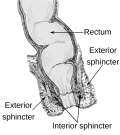 Diagram of the anorectum
 -
 Gross pathology of minimally invasive colorectal surgery of tubulovillous adenoma


