Gratin: Difference between revisions
CSV import Tags: mobile edit mobile web edit |
CSV import |
||
| Line 31: | Line 31: | ||
{{Cuisine-stub}} | {{Cuisine-stub}} | ||
<gallery> | |||
File:8.28.12CheeseburgerMacByLuigiNovi1.jpg|Cheeseburger Macaroni Gratin | |||
File:Avocado_gratin.jpg|Avocado Gratin | |||
File:Gratin-Dauphinois.jpg|Gratin Dauphinois | |||
</gallery> | |||
Latest revision as of 01:12, 18 February 2025
Gratin is a widely popular culinary technique in food preparation, notable for its golden crust, often achieved through a combination of breadcrumbs, grated cheese, egg, and/or butter. This method is primarily used in the oven or under a broiler to create a rich, crispy topping that contrasts with the soft, baked underneath layer of the dish. Originating from French cuisine, the term gratin refers to both the cooking technique and the dish itself, which can include a variety of main ingredients such as potatoes, vegetables, pasta, or meat.
History[edit]
The history of gratin dates back to early European cuisine, where the technique of browning a dish's top layer was employed to enhance its flavor and texture. The word gratin itself is derived from the French verb gratter, meaning "to scrape" or "to grate", referring to the scraping of the cooking dish's bottom to include the crust in servings. The concept of gratin has evolved over centuries, with one of the most famous variations being Gratin Dauphinois, a traditional French dish that features thinly sliced and layered potatoes baked in cream.
Preparation[edit]
The preparation of a gratin involves arranging the main ingredients in a shallow dish, followed by the addition of a topping that will crisp up during the cooking process. Common toppings include breadcrumbs, grated cheese (such as Parmesan, Gruyère, or Cheddar), and sometimes sauces like béchamel or stock. The dish is then baked or broiled until the topping is golden and crispy. The choice of ingredients and the combination of flavors make gratin a versatile dish that can be adapted to suit different tastes and dietary requirements.
Variations[edit]
Gratin dishes vary widely across different cuisines and can be adapted to include almost any main ingredient. Some popular variations include:
- Gratin Dauphinois: A traditional French dish made with sliced potatoes, cream, and garlic.
- Gratin Savoyard: Similar to Gratin Dauphinois but uses broth instead of cream and includes cheese.
- Cauliflower Gratin: A vegetable-based gratin that features cauliflower in a creamy cheese sauce.
- Macaroni and Cheese: While not traditionally considered a gratin, many versions of this dish incorporate a gratinated topping.
Nutritional Considerations[edit]
Gratin dishes, especially those rich in cheese and cream, can be high in calories and fat. However, variations using low-fat dairy products or vegetable-based sauces can offer healthier alternatives. Additionally, gratins made with a variety of vegetables can provide essential nutrients and fiber.
Cultural Significance[edit]
Gratin has become a staple in many cuisines beyond its French origins, reflecting the adaptability and widespread appeal of the dish. It is often associated with comfort food, given its warm, creamy texture and rich flavor. The dish's versatility and ease of preparation have made it a favorite in home kitchens and professional settings alike.
See Also[edit]

-
 Cheeseburger Macaroni Gratin
 -
 Avocado Gratin
 -
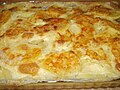 Gratin Dauphinois


