Perforator flaps: Difference between revisions
CSV import |
CSV import |
||
| Line 43: | Line 43: | ||
{{medicine-stub}} | {{medicine-stub}} | ||
<gallery> | |||
File:Direct_and_indirect_perforators.png|Direct and Indirect Perforators | |||
File:Propeller_flap.png|Propeller Flap | |||
</gallery> | |||
Latest revision as of 00:56, 18 February 2025
Perforator flaps are a type of tissue transfer used in plastic surgery and reconstructive surgery to repair defects in the body. This technique involves the transfer of skin and fat from one part of the body to another, while preserving the blood supply to the transferred tissue through small blood vessels known as perforators. Perforator flaps have become increasingly popular due to their ability to provide a more natural appearance and minimize donor site morbidity.
History[edit]
The concept of perforator flaps has evolved significantly over the past few decades. Initially, surgeons relied on more traditional flaps that included muscle and skin to repair defects. However, with the advancement in microsurgical techniques and a better understanding of the vascular anatomy, the focus shifted towards preserving muscle and reducing donor site complications. This led to the development of perforator flaps, which are based solely on the perforating vessels that supply the skin and fat.
Types of Perforator Flaps[edit]
Several types of perforator flaps have been identified, each named after the perforating vessel it utilizes. Some of the most commonly used perforator flaps include:
- Deep Inferior Epigastric Perforator (DIEP) flap: Used primarily for breast reconstruction after mastectomy.
- Superficial Inferior Epigastric Artery (SIEA) flap: Another option for breast reconstruction, similar to the DIEP flap but involves different vessels.
- Anterolateral Thigh (ALT) flap: Versatile flap used for various reconstructive purposes, including head, neck, and extremity reconstruction.
- Posterior Interosseous Artery (PIA) flap: Mainly used for hand and forearm reconstruction.
Advantages[edit]
Perforator flaps offer several advantages over traditional flap techniques, including:
- Reduced donor site morbidity: Since muscle is preserved, patients experience less pain and fewer functional deficits at the donor site.
- Improved aesthetic outcomes: Perforator flaps can provide a more natural look, especially in breast reconstruction.
- Versatility: These flaps can be designed in various sizes and shapes to fit the needs of the reconstruction site.
Surgical Technique[edit]
The creation and transfer of a perforator flap is a complex procedure that requires detailed knowledge of the vascular anatomy and advanced microsurgical skills. The steps generally include:
1. Identifying and mapping the perforator vessels using Doppler ultrasound. 2. Carefully dissecting the flap around the identified perforators, preserving the blood supply. 3. Transferring the flap to the defect site. 4. Connecting the blood vessels of the flap to vessels near the defect site using microsurgery.
Complications[edit]
While perforator flap surgery is generally safe, it is not without risks. Complications can include:
- Flap failure due to vascular compromise.
- Partial flap loss.
- Donor site complications, such as wound healing issues.
- Hematoma or seroma formation.
Conclusion[edit]
Perforator flaps represent a significant advancement in reconstructive surgery, offering patients improved aesthetic outcomes and reduced morbidity. As techniques and understanding of vascular anatomy continue to evolve, the use of perforator flaps is likely to expand, benefiting a wider range of patients.

-
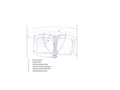 Direct and Indirect Perforators
 -
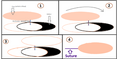 Propeller Flap


