Chum salmon
Chum Salmon (Oncorhynchus keta), also known as dog salmon or keta salmon, is a species of anadromous fish in the salmon family. It is a Pacific salmon, and is distributed in the North Pacific Ocean, including the Arctic Ocean.
Description[edit]
Chum salmon are the largest of the Pacific salmon species. They can grow up to 1 meter in length and weigh up to 16 kilograms. The body of the chum salmon is deeper than most salmonid species. In common with other species found in the Pacific, chum salmon are semelparous, dying after they spawn.
Life Cycle[edit]
Chum salmon have a complex life cycle that includes freshwater and marine phases. They hatch in freshwater streams and rivers, then migrate to the ocean as juveniles. They spend several years at sea, where they grow and mature before returning to their natal streams to spawn and die.
Distribution and Habitat[edit]
Chum salmon are widely distributed in the North Pacific, from the west coast of the United States and Canada, across to Russia and Japan. They are also found in the Arctic Ocean. They prefer cooler waters and are often found in coastal waters and estuaries.
Conservation Status[edit]
Chum salmon populations are currently stable, but they face threats from habitat loss, pollution, and overfishing. Conservation efforts are focused on protecting their spawning habitats and managing fishing to ensure sustainable populations.
Economic Importance[edit]
Chum salmon are commercially important and are harvested for their meat and eggs. They are also popular with recreational anglers.
See Also[edit]
 | This fish-related article is a stub. You can help WikiMD by expanding the page. |
-
 Breeding male chum salmon
 -
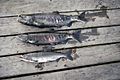 Chum salmon in breeding color
 -
 Bear catching chum salmon
 -
 Chum salmon egg
 -
 Chum salmon capture production, thousand tonnes, 1950-2022
 -
 Newborn chum salmon

.jpg)


_salmon,_capture_production,_thousand_tonnes,_1950-2022.svg)

Medical Disclaimer: WikiMD is for informational purposes only and is not a substitute for professional medical advice. Content may be inaccurate or outdated and should not be used for diagnosis or treatment. Always consult your healthcare provider for medical decisions. Verify information with trusted sources such as CDC.gov and NIH.gov. By using this site, you agree that WikiMD is not liable for any outcomes related to its content. See full disclaimer.
Credits:Most images are courtesy of Wikimedia commons, and templates, categories Wikipedia, licensed under CC BY SA or similar.
Translate this page: - East Asian
中文,
日本,
한국어,
South Asian
हिन्दी,
தமிழ்,
తెలుగు,
Urdu,
ಕನ್ನಡ,
Southeast Asian
Indonesian,
Vietnamese,
Thai,
မြန်မာဘာသာ,
বাংলা
European
español,
Deutsch,
français,
Greek,
português do Brasil,
polski,
română,
русский,
Nederlands,
norsk,
svenska,
suomi,
Italian
Middle Eastern & African
عربى,
Turkish,
Persian,
Hebrew,
Afrikaans,
isiZulu,
Kiswahili,
Other
Bulgarian,
Hungarian,
Czech,
Swedish,
മലയാളം,
मराठी,
ਪੰਜਾਬੀ,
ગુજરાતી,
Portuguese,
Ukrainian
